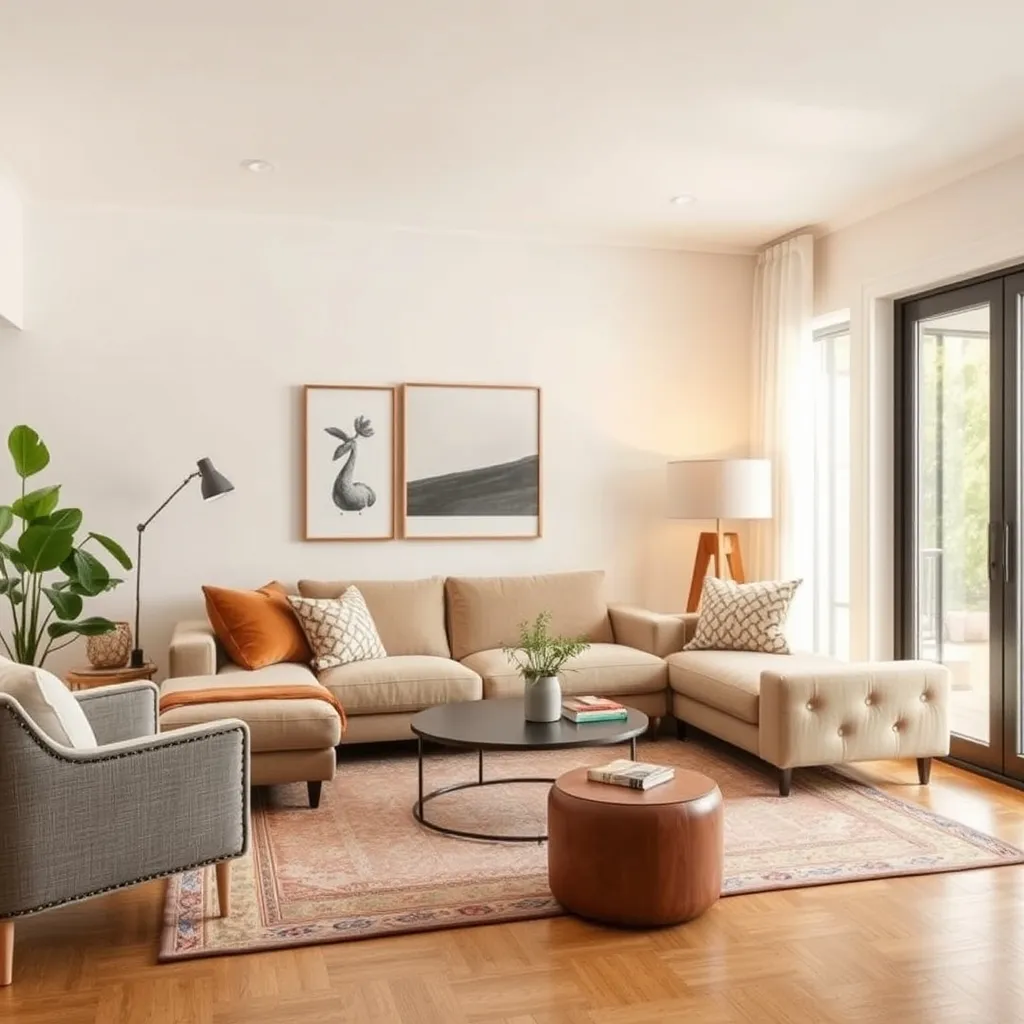
When square footage is at a premium, every inch of a small living room counts. The challenge isn’t just about fitting in the essentials—it’s about doing so with intention, ensuring the space feels open, functional, and inviting. With the right layout and furniture choices, even the most compact living rooms can serve multiple purposes while maintaining a sense of airiness. Here’s how to make the most of your small living area without compromising on comfort or style.
Prioritize Multi-Functional Furniture
In a small living room, furniture that pulls double duty is non-negotiable. A sofa bed like the IKEA Friheten is a classic example, offering seating by day and a guest bed by night without dominating the room. For a more modern approach, consider a storage ottoman from West Elm’s Modular Storage Collection, which can serve as a coffee table, extra seating, and hidden storage for blankets or books. The key is to choose pieces with clean lines and slim profiles—think of the Article Svelti Sofa, which sits just 28 inches deep but still provides ample seating, as covered in our Mid-Century Modern Sofa Guide: What to Look For. Avoid bulky sectionals or armchairs with wide arms, as they can make the room feel cramped.
Another space-saving strategy is to opt for furniture with legs rather than solid bases. Pieces like the CB2 Armless Sofa or a mid-century modern-style chair create the illusion of more floor space by allowing light to pass underneath, a principle highlighted by Apartment Therapy. This trick works especially well in rooms with low ceilings, where visual height is crucial. Pair these pieces with a glass or acrylic coffee table, such as the Haike Designs Acrylic Coffee Table, to maintain an open, uncluttered look.
Embrace Vertical Space and Strategic Zoning
When floor space is limited, the walls become your best ally. Installing floating shelves from brands like Pottery Barn not only frees up surface area but also draws the eye upward, making the room feel taller. Use these shelves to display books, plants, or decorative objects, keeping surfaces clear and reducing visual clutter. For a more dramatic effect, consider a floor-to-ceiling bookcase like the Wayfair Mid-Century Modern Bookcase, which can double as a room divider in open-concept spaces.
Zoning is another effective way to maximize a small living room. Instead of pushing all your furniture against the walls, try floating your sofa or chairs slightly away from the walls to create a more intimate seating area. This technique works particularly well in rooms with awkward layouts or odd angles. For example, place a slim console table behind the sofa to define the space while adding storage or display options. In a galley-style living room, arrange seating in an L-shape to define separate areas for lounging and dining, as seen in many feature homes according to Architectural Digest.
Lighting plays a subtle but critical role in small living rooms. Swap out bulky floor lamps for wall-mounted sconces or plug-in pendant lights, which free up floor space while adding ambiance. A single statement floor lamp, like the Lamps Plus Arhaus Floor Lamp, can anchor the room without overwhelming it. Mirrors are another must-have; a large, unframed mirror placed opposite a window will bounce light around the room, making it feel larger and brighter.
Finally, don’t underestimate the power of color and texture. Light, neutral walls in shades like Sherwin-Williams Alabaster or Benjamin Moore’s Chantilly Lace can make a small room feel more expansive, while a single bold accent wall adds depth without closing in the space. Textured rugs, such as a jute or wool piece from Rugs USA, can ground the room and add warmth, while keeping the palette cohesive ensures the space feels intentional rather than cluttered.